
Same Brand. Same Look. Built Different Inside: Big Box Store vs. Contractor Supply Water Heaters
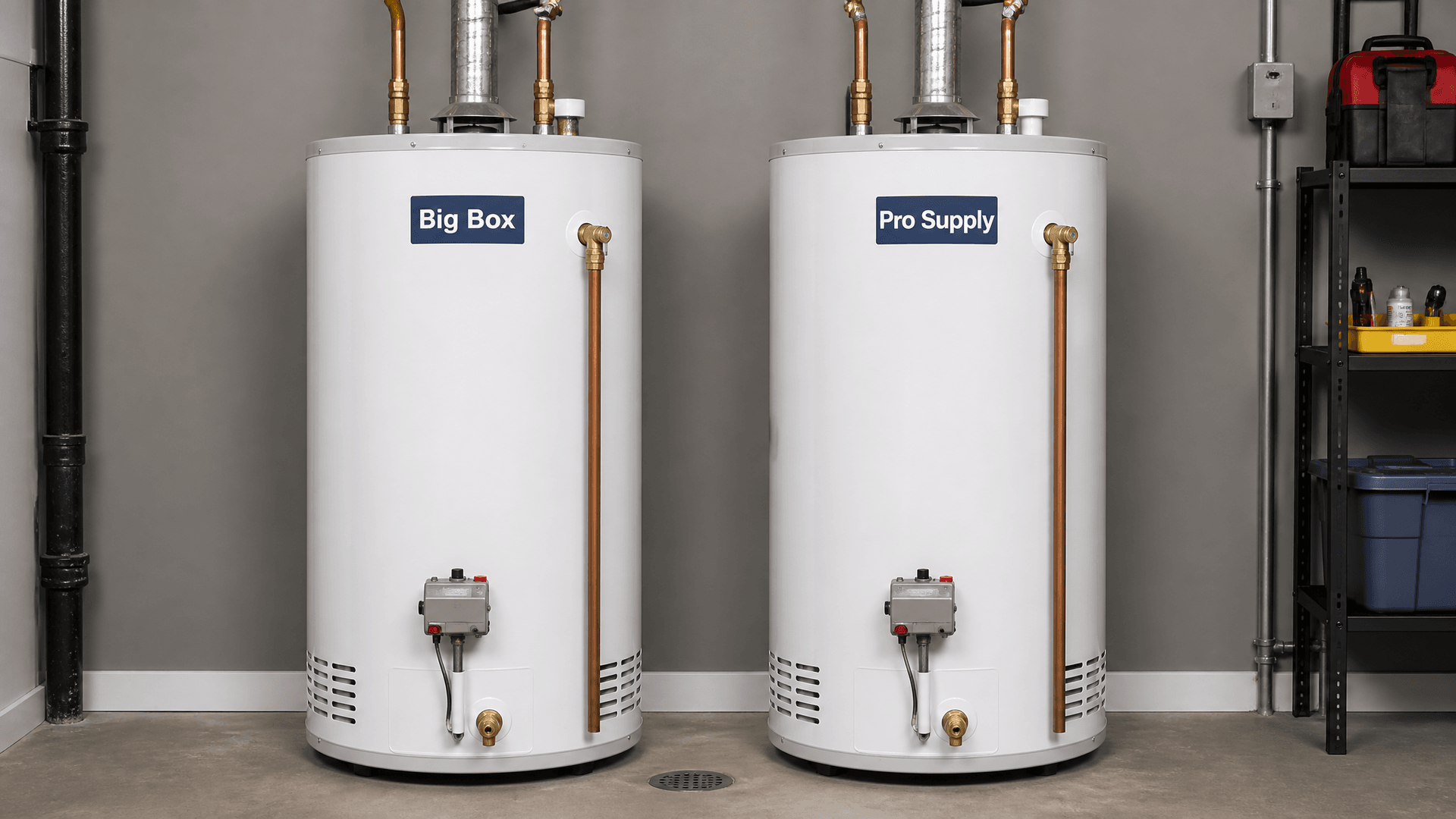
You can buy the same brand water heater at a big box store or from a licensed plumber's supply house. They look identical on the outside — but what's hidden inside tells a very different story.
6–8 yrs
Typical big box heater lifespan
10–15 yrs
Contractor-grade heater lifespan
$150–300
Typical price difference
They Look Exactly the Same
Walk into a Home Depot or Lowe's and pick up a water heater from a major brand — Rheem, A.O. Smith, Bradford White, whatever name you trust. Then go to a plumbing contractor's supply house and ask for the same brand.
Put them side by side and they look identical. Same logo. Same color. Same basic shape and size. Even the model numbers might look similar. A homeowner would have no reason to think there's any difference at all.
But as a home inspector, I see the difference every single day — because I see what happens 5, 8, or 10 years after installation. And the big box store units fail sooner. Consistently.
What's Different on the Inside
The outside is the marketing. The inside is the engineering. Here's where big box models typically cut corners:
Thinner Anode Rod
The anode rod is the sacrificial metal bar inside the tank that protects it from rust. It corrodes so the tank doesn't. Big box models often use a thinner, shorter anode rod that wears out faster — sometimes in just 2–3 years. Contractor-grade units typically come with a thicker, longer rod (sometimes two) that lasts 4–6 years. Once that rod is gone, the tank itself starts rusting from the inside out.
Less Insulation
The foam insulation between the tank and the outer shell keeps heat in. Contractor-grade heaters typically have thicker, denser insulation, which means the burner or element doesn't have to work as hard. Big box units often have thinner insulation — your energy bill is a little higher every month, and the heating element wears out faster because it cycles more often.
Cheaper Heating Elements & Burner Assemblies
Electric models from big box stores often come with basic copper heating elements that corrode faster, especially in Florida's hard water. Contractor-grade versions are more likely to include longer-lasting stainless steel or heavy-duty elements. Gas models may have simpler burner assemblies with less durable igniters.
Thinner Tank Walls & Lower-Grade Glass Lining
Some big box models use slightly thinner steel for the tank itself, and a lower-quality glass lining on the inside. That glass lining is what keeps water from directly touching the steel. When it's thinner or applied less evenly, micro-cracks form sooner, and once water finds bare steel, rust starts — and you're on a countdown to a leak.
Plastic vs. Brass Drain Valves
A small detail, but telling. Big box units often have a plastic drain valve at the bottom. Contractor-grade units typically come with a brass valve. The plastic one is more prone to cracking and leaking — exactly at the point where you need it to work when it's time to flush the tank.
Why Florida Is Especially Hard on Cheap Water Heaters
Florida's water is tough on water heaters. Much of the state — especially here on the Treasure Coast — has hard water with high mineral content. That means more sediment buildup at the bottom of the tank, more strain on the heating elements, and faster corrosion of the anode rod.
A contractor-grade unit with a thicker anode rod and better-quality glass lining is built to handle that kind of water for 10–15 years. A big box unit with thinner internals? It's struggling by year 5 or 6.
And here in Florida, when a water heater fails, it often leaks — in a garage, a closet, or an interior utility room. Water damage, mold risk, and an emergency replacement at full price. That $150 you saved at the store just cost you a lot more.
Why Manufacturers Do This
This isn't a secret in the trades — plumbers and inspectors talk about it all the time. But most homeowners don't know because nobody tells them.
Here's the business side: big box stores buy in massive volume and negotiate hard on price. To hit the price point the store wants while still making a profit, the manufacturer builds a version with slightly cheaper components. It still works. It still heats water. It still carries the same brand name. But it's designed to a price, not to a lifespan.
The contractor-grade version sold through plumbing supply houses is designed for professionals who install water heaters every day and whose reputation depends on them lasting. Plumbers don't want callbacks. They don't want angry customers at year 5. So the supply house version is built heavier.
Same brand. Same logo. Different standards. That's the trade-off.
What I See as an Inspector
When I do a 4-point inspection or a full home inspection, the water heater is one of the first things I look at. I check the age, the condition of the connections, whether there's corrosion or leaking, and the overall quality of the unit.
Over thousands of inspections, the pattern is unmistakable: the big box units show more rust on the tank fittings sooner, the drain valves deteriorate faster, and the tanks themselves tend to start weeping at the seams around year 6–8. Contractor-grade units of the same age typically look noticeably better.
Your insurance company cares about this too. On a 4-point inspection, an aging or corroded water heater can trigger a requirement to replace it before your policy renews. A unit that lasts longer saves you that headache.
So What Should You Do?
If you're replacing a water heater: Call a licensed plumber and ask them to install a contractor-grade unit from their supply house. Yes, it costs $150–$300 more. But you're getting a unit that's genuinely built to last longer, with heavier components where it matters most. And you get professional installation, which matters for warranty and insurance purposes.
If you already have a big box unit: Don't panic — it still works, and plenty of them go 8–10 years with proper maintenance. Flush the tank once a year to clear sediment (especially important in Florida), and have a plumber check the anode rod every 2–3 years. Replacing just the anode rod is cheap ($20–$50 for the part) and can add years to the tank's life.
If you're buying a home: During the inspection, ask about the water heater's age, brand, and condition. If it's a big box model that's already 7–8 years old, plan for replacement in the near future — and budget for a contractor-grade unit this time around.
The Bottom Line
A water heater from a big box store and the same brand from a contractor supply house are not the same product. The outside might look identical — even carry the exact same name — but it's what's hidden inside that determines how long it lasts and how well it holds up, especially in Florida's demanding conditions.
Spend a little more now on the unit that's built for a plumber's reputation, not a store shelf price. Your future self — and your insurance company — will thank you.
Need a Home or Insurance Inspection?
We check every major system in your home — including the water heater — and give you an honest, detailed report.