
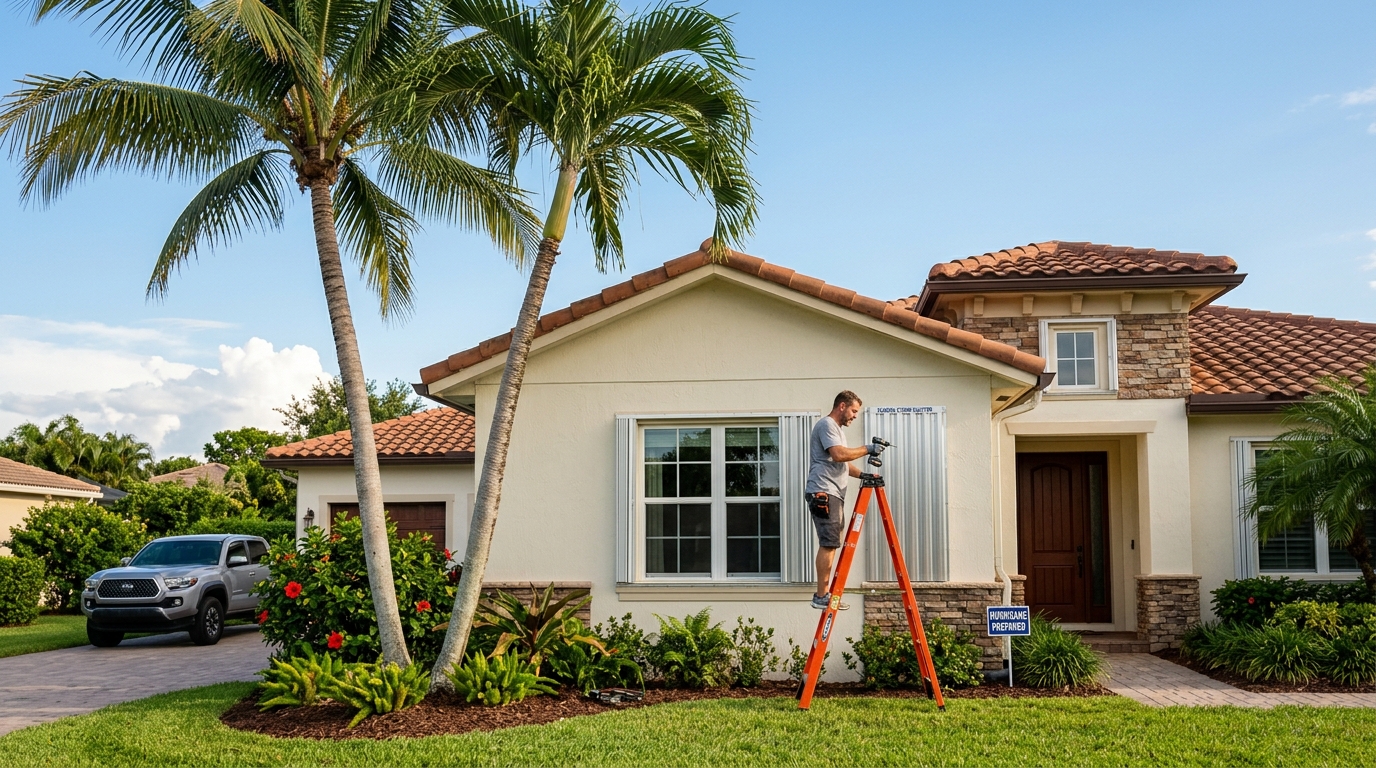
Every Florida homeowner knows the drill: the first named storm forms out in the Atlantic, and suddenly the whole coast is fighting over the last case of water at Publix. The truth is, the homeowners who stay calm during hurricane season aren't lucky — they're prepared before the cone ever shows up on the news.
Here on the Treasure Coast, we've seen what a well-prepared home looks like after a storm versus one that was left to chance. This is the checklist we wish every homeowner ran through in May, not the day before landfall.
Start with the part that matters most: your roof
Your roof is the single most important thing standing between your family and a hurricane. It's also the first thing your insurance company scrutinizes. Before the season ramps up, walk your property and look for:
- Missing, curled, or cracked shingles — especially along ridges and edges where wind gets underneath.
- Loose or rusted flashing around chimneys, vents, and skylights.
- Sagging areas, dark streaks, or soft spots that hint at trapped moisture.
- Debris and clogged valleys that keep water from draining fast in a downpour.
A small roof repair in June is inexpensive. The same problem discovered after a storm — with water already in your attic — is a claim, a deductible, and weeks of stress.
Windows, doors, and the openings wind loves
Hurricanes don't usually blow houses down from the outside. They get inside — through a broken window or a failed garage door — and then pressurize the home until the roof lifts. Protecting your openings is protecting your whole house.
Before the season
- Test every storm shutter, panel, and track. Make sure the hardware is there and the panels actually fit — don't discover a missing bolt at hour three of installation.
- Inspect your garage door for bracing. A standard door is one of the most vulnerable points on the entire house.
- If you have impact windows or hurricane fabric, confirm they're rated, installed correctly, and documented.
The yard is a pile of projectiles waiting to happen
In 120 mph wind, a patio chair becomes a battering ram. As a storm approaches, plan to bring in or secure:
- Patio furniture, grills, umbrellas, and planters.
- Trash cans, kids' toys, and pool equipment.
- Trim dead or overhanging branches early in the season — tree services are booked solid once a storm is named.
Protect the paperwork, not just the property
This is the step almost everyone skips — and regrets. If you ever need to file a claim, your recovery moves at the speed of your documentation.
- Photograph and video every room, plus the exterior and roof, and store it in the cloud.
- Keep a digital copy of your insurance policy, and know your hurricane deductible (it's usually a percentage, not a flat number — that surprises people).
- Save receipts for any recent upgrades: new roof, impact windows, updated electrical or plumbing.
The one document that pays you back: a wind mitigation inspection
Here's where preparation turns into real money. A wind mitigation inspection documents the storm-resistant features your home already has — things like roof-to-wall connections, roof deck attachment, and secondary water barriers. Florida law requires insurers to give credits for these features, and those credits can add up to hundreds of dollars a year.
Many homeowners are paying full price simply because no one ever documented what their home was built with. If your home is newer or has had a roof replacement, the savings are often substantial.
Your quick countdown checklist
- Early season (May–June): roof inspection, tree trimming, shutter/hardware check, wind mitigation inspection.
- Storm forms: photograph the home inside and out, back up documents, review your deductible.
- 72 hours out: install shutters or fabric, secure the yard, fuel vehicles and generator.
- 24 hours out: charge devices, fill water, set the fridge cold, and stay off the roof.
Peace of mind starts with knowing where you stand
You can't control the weather, but you can walk into hurricane season knowing exactly what shape your home is in — and paying a fair price for insurance because your home's strengths are on paper.
If you'd like a professional set of eyes on your roof and structure before the next storm, or a wind mitigation inspection that could lower your premium, book an inspection online or call us at (772) 224-5655. We're local to the Treasure Coast, and we'd rather help you prepare than see you file a claim.