
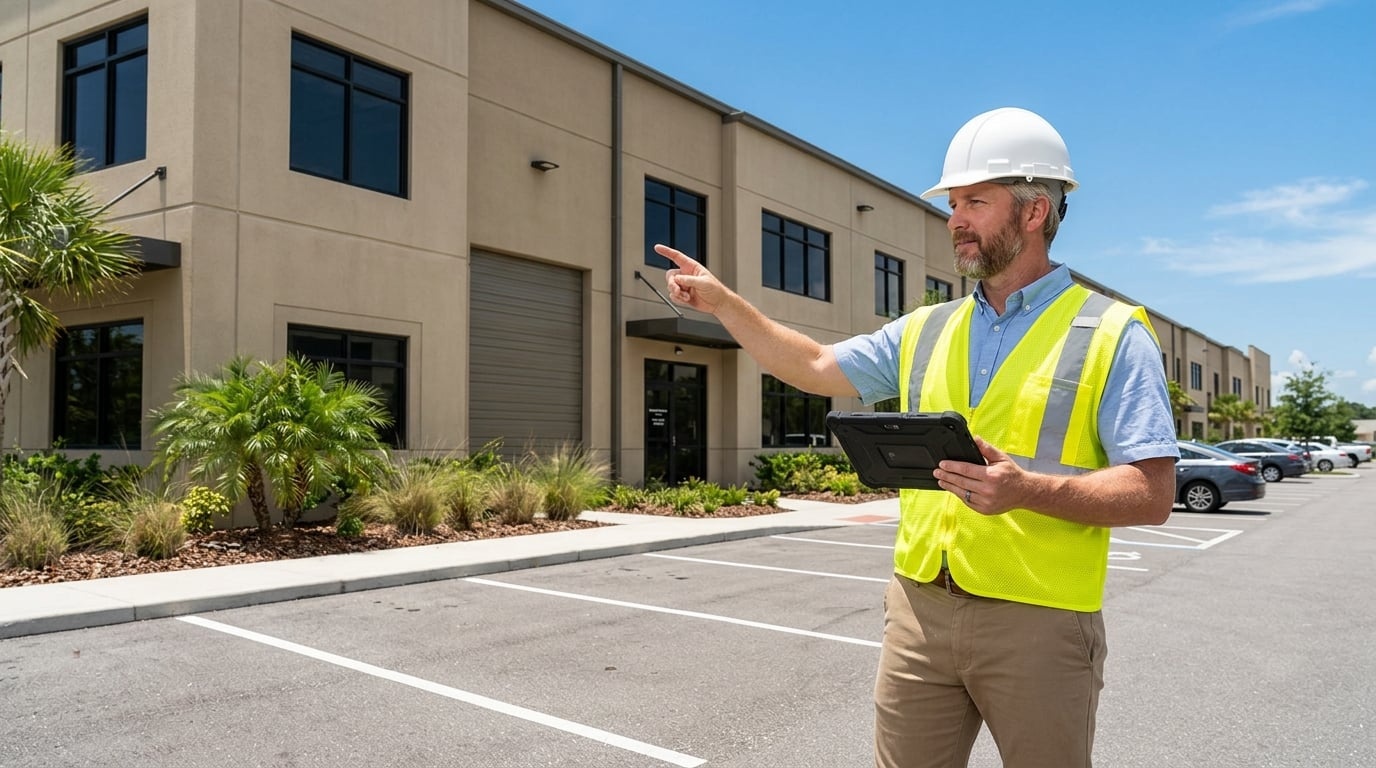
 CCPIA-Certified Field Inspector
Phase I Environmental
Site Assessments
The lender-required environmental due-diligence report for commercial property — delivered to the ASTM E1527-21 standard, so your closing stays on track and your liability stays protected.
Certified field inspection by Calvin S. Johnson, paired with a licensed Environmental Professional who prepares the official report.
Due diligence that protects your investment — before you close
A Phase I Environmental Site Assessment is a standardized report that identifies whether a commercial property carries potential environmental contamination liability — things like former fuel tanks, chemical use, or contamination that migrated from a neighboring site.
It’s non-intrusive — no drilling, no soil or water sampling. Instead it combines deep records research, an on-site walkthrough, and interviews into one authoritative report your lender can rely on.
Done right, it lets a buyer qualify for federal “innocent landowner” liability protections — so you’re never on the hook for a problem you didn’t create.
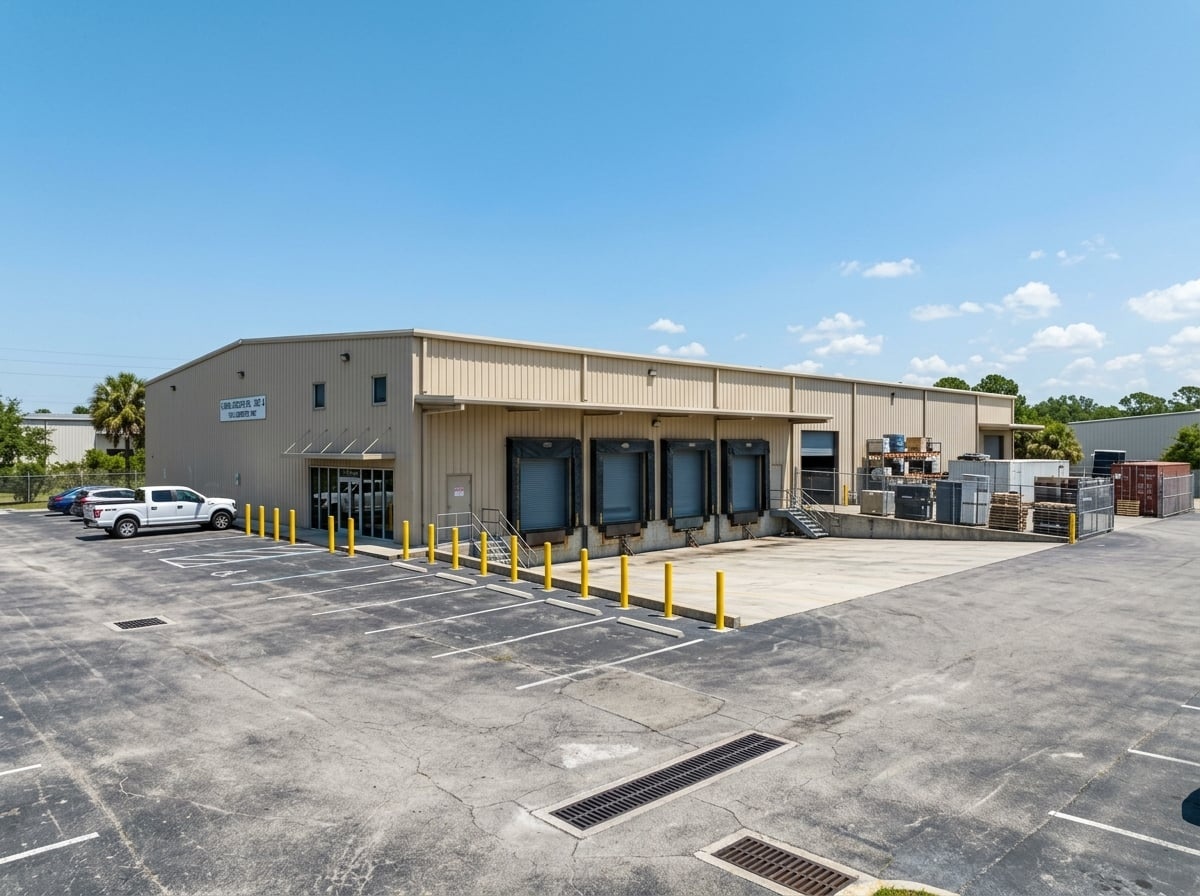
Who orders a Phase I ESA?
If you’re buying, financing, or refinancing commercial property, chances are you’ll need one.
Lenders & Banks
Almost every commercial loan requires a Phase I ESA before funding. It protects the bank's collateral from hidden contamination liability.
SBA Loans
SBA 7(a) and 504 loans have specific environmental due-diligence requirements that a compliant Phase I ESA satisfies.
Buyers & Investors
Qualify for CERCLA liability protections (the 'innocent landowner' defense) so you're not stuck with someone else's cleanup bill.
Brokers & Attorneys
Keep the deal moving and the closing on schedule with due diligence that holds up under scrutiny.
Four parts, one authoritative report
Every compliant Phase I ESA is built from these four components.
Records & Database Review
Federal, state and local environmental databases plus historical aerials, fire-insurance maps, city directories, title and permit records — reconstructing decades of property history.
Site Reconnaissance (Your Fieldwork)
A physical, non-intrusive walkthrough of the property and adjacent sites — looking for storage tanks, staining, drainage, chemical storage and other red flags, fully photo-documented.
Interviews
Conversations with current and past owners, occupants and local officials to surface spills, chemical use and history that never made it into the public record.
Professional Report
A licensed Environmental Professional synthesizes every finding into a written ASTM E1527-21 report identifying any Recognized Environmental Conditions (RECs).
How we deliver your report
Certified local fieldwork, backed by a licensed environmental reporting team.
Your on-site inspection
Calvin S. Johnson — CCPIA-certified and multi-trade experienced — performs the site reconnaissance: a thorough, photo-documented walkthrough of the property and its surroundings, capturing the physical conditions the report depends on.
Licensed Environmental Professional report
Our environmental reporting partner — qualified Environmental Professionals (EPs) — handle the regulatory database searches, historical research and the formal written ASTM E1527-21 report that lenders and the SBA require. You get one seamless, accountable service.
A complete, defensible record
Your Phase I ESA is a formal, EP-signed document built to satisfy lenders, the SBA, attorneys and the EPA’s All Appropriate Inquiries rule. Every report follows the same rigorous ASTM E1527-21 structure — ten numbered sections backed by nine evidence appendices:
Client, consultant, subject-property and project identifiers.
Property description, findings & opinions, conclusions, and the bottom-line recommendations — including any RECs, CRECs, HRECs or data gaps.
Purpose, scope of work, assumptions, limitations, deviations and reliance parties.
On-site walkthrough findings — tanks (USTs/ASTs), drums, PCBs, staining, discharge features, pits/ponds, waste, wells and adjoining-property observations.
Title records, specialized knowledge, activity/use limitations, valuation notes and owner/occupant details.
Regulatory database search, physical setting (topography, hydrology, flood/wetlands) and historical use via aerials, fire-insurance & topo maps, and city directories.
Documented conversations with owners, occupants and officials who know the property's history.
Precursory notes on asbestos, lead-based paint, mold, radon and construction debris (business environmental risks).
Formal certification by the licensed Environmental Professional (EP).
Credentials establishing the EP meets ASTM / AAI professional requirements.
Nine appendices of hard evidence
Findings aren’t just stated — they’re documented. Every conclusion is backed by the source records, maps and photographs bundled at the back of your report.
First time ordering a Phase I?
You’re not alone — here’s what most owners ask.
What exactly is a Phase I ESA?
A Phase I Environmental Site Assessment is a standardized, non-intrusive due-diligence report (performed to ASTM E1527-21 / EPA 'All Appropriate Inquiries' standards) that identifies potential environmental contamination liabilities on a commercial property. It reviews records, inspects the site, and interviews people who know its history — no soil or water sampling is involved at this stage.
Why does my lender require one?
Environmental contamination can destroy a property's value and saddle the owner — and sometimes the lender — with enormous cleanup costs. Lenders require a Phase I ESA to protect their collateral and to make sure you qualify for the legal liability protections that come with proper due diligence.
How long does it take?
Plan on a 3–4 week turnaround once the property is accessible and the necessary information is available. Records research, database orders and interviews all take time — this is a thorough, standards-based report, not a same-day checklist.
What does it cost?
Phase I Environmental Site Assessments start at $2,300. Final pricing depends on the property's size, type, history and complexity. Share your property details and we'll give you a firm quote.
What happens if a problem is found?
If the report identifies a Recognized Environmental Condition, it may recommend a Phase II ESA — intrusive testing (soil, groundwater) to confirm and characterize the issue. Many properties come back clean; the Phase I simply gives you and your lender the confidence to proceed.
Is the report accepted by banks and the SBA?
Yes. The report is prepared to the current ASTM E1527-21 standard by a licensed Environmental Professional, which is what lenders, SBA programs and attorneys expect for commercial transactions.
Need a Phase I ESA for your closing?
Tell us about the property — address, size, type and your lender’s deadline — and we’ll send you a firm quote and timeline. Phase I assessments start at $2,300.
Also need a building-condition report? Ask about our Commercial Property Inspections.